Russia’s Defense Ministry confirmed the Northern Bridge strike and cast it as logistics warfare. Klitschko’s account stays concrete: road surface and trolleybus cables damaged, traffic suspended, then two people wounded.
Calling this a “new tactic” only holds if the target set is the city’s daily movement, not only its warehouses and apartments. The confirmation matters because it closes the usual ambiguity about who hit the span.
“Kyiv Mayor Vitalii Klitschko said the strike on the bridge damaged the road surface and trolleybus cables, forcing traffic to be suspended. He later said two people were wounded in the attack, one of whom was briefly hospitalized.”
Most coverage of Friday’s Missouri ruling is about which party gains a seat. Read it from the county clerk’s counter instead. Absentee voting had started Tuesday. Boone County had 17 ballots in. St. Charles had 410 absentee ballots out in the 2nd District alone that couldn’t have been counted under a new map. The county would have had to reach out and offer those voters new ballots.
“The decision means election officials, who began accepting absentee ballots Tuesday, can continue their preparations without interruption.
In Boone County in central Missouri, some voters in the 3rd and 4th districts would have moved into the 5th District and some from the 4th to the 3rd. County Clerk Brianna Lennon said 16 in-person absentee ballots and one overseas ballot had been cast by Friday morning.
While most are from voters in the 3rd District who would not have changed if the Supreme Court had upheld Clark’s order, five could not wait.
Other voters who have come to the office have decided to wait, she said.
“At least one person didn’t have an option,” Lennon said Wednesday of a voter who cast their ballot on Tuesday, the first day of absentee voting. “They were leaving today.”
In St. Charles County, 410 of the 1,889 absentee ballots sent locally and to overseas voters are in the 2nd District and could not be counted if the districts had changed, county elections Director Kurt Bahr said.
“If the courts change the map we will have to reach out to them and ask if they want a new ballot,” Bahr said.”
The Court’s own reasoning leans on exactly that. Purcell normally means courts shouldn’t change the rules close to an election. Here the justices say it’s past close: ballots are printed, mailed and coming back.
“The Purcell principle applies with even greater force here. The election is not merely upcoming; it has already started. Ballots using the 2022 map have been printed and mailed. Absentee voting has already begun, as has military and overseas voting.”
This part answers the main argument from the other side. The Eighth Circuit and the Republican attorneys general blamed the Missouri Supreme Court’s Sept. 3 ruling for the chaos. The per curiam points to a state ruling from May that already flagged the risk, and says the Secretary of State used the 2025 map for the primary anyway. Unsigned, no noted dissents.
“So in the several-month period before the August primary election, the Missouri Secretary of State was well aware that conducting the August primary election with the 2025 map carried significant risks. The Secretary nonetheless chose to proceed with the 2025 map for the primary.”
And the zoom-out, so Missouri isn’t read as the whole story. Nine states are voting on new House maps this year. Seven favor Republicans and two, California and Utah, could help Democrats. Missouri is the one where the clock ran out on the change.
“All told, new congressional districts are being used this year in Alabama, California, Florida, Louisiana, North Carolina, Ohio, Tennessee, Texas and Utah. All favor Republicans except in California and Utah, where the new boundaries could help Democrats. If the districts all played out as designed, Republicans could net up to nine additional seats, but a good year for Democrats could reduce that tally.”
Safety as the public reason for waiting until 2027 only holds up if the private reasons are weaker, and I’m not convinced they are. Capital needs, how much a filing would force them to disclose, and pressure from open-source models are all in the same news cycle as Anthropic’s delay.
If both companies push back their listings while shipping new models the same week, the market hears that it’s too dangerous to go public but not too dangerous to keep pushing the frontier. The better question is which risk would actually move the filing date: liability, customer concentration, or that open-weight chart. “Safety” is the headline word, not the answer.
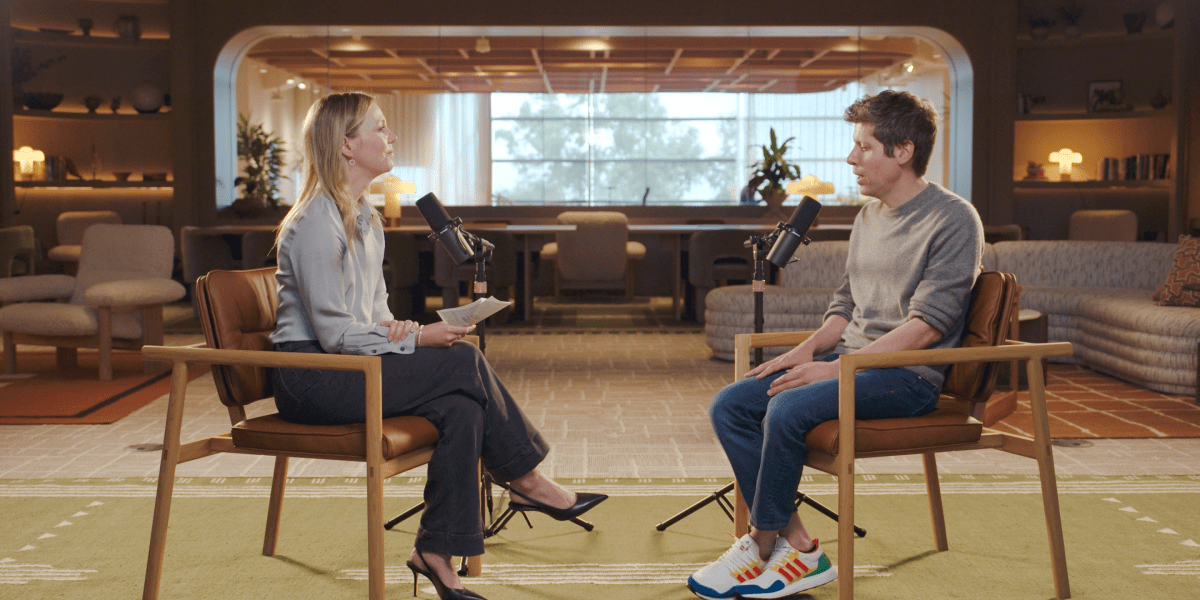
“When pressed on whether 2026 is off the table in favor of 2027, Altman replied, “I would say not 2026. Yeah, we got a lot of stuff to do, like meeting this moment of what is going to be required for safety and alignment, and how the industry and governments can work together.””
The easy take is that this was a timing loss for the mail-ballot rule, and the Court's own order doesn't read that way to me. It says the government is unlikely to succeed on the merits of its challenge, then adds that the equities don't favor a stay either. Only one of those sounds like a calendar. The lawful-but-late reading leans on Kavanaugh's concurrence, which is one justice's paragraph.
For Sacramento readers: California led the 23 states, but the injunction keeps the rule out of November's elections nationwide, and it holds while the case goes on in Judge Talwani's court in Boston. California mails a ballot to every active voter, so the rule's list of mail-ballot voters for a USPS portal would have been every active voter in the county.
“In an order issued on Monday night, the court indicated that the “Government is unlikely to succeed on the merits of its challenge to” Talwani’s order – a key factor in determining whether to grant the relief that the government was seeking. “And the equitable factors applicable for obtaining emergency relief from this Court” – such as whether the government will be permanently harmed if Talwani’s order is not put on hold – “do not favor a stay,” the court added.”