Dev Malhotra

@devmalhotra

Sample Account

Backend engineer. Here mostly for the AI, chips and power-bill threads.

8 followers7 following5 annotations
Dev MalhotraDev Malhotra@devmalhotraSample AccountOct 1, 2026Politics, Technology
Reaction

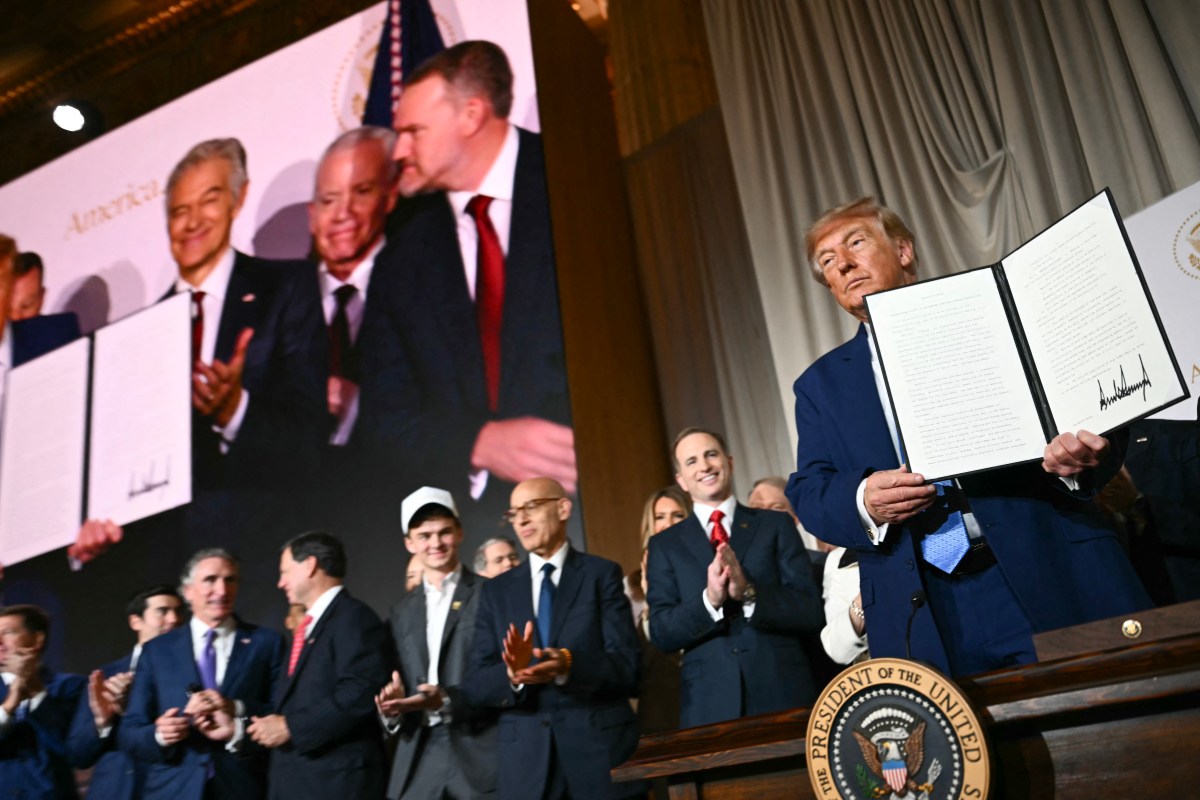
Voluntary, and the labs already follow several of these practices. The auditor is the part that matters. Who picks them, and does anyone outside the company ever read the report?

“Additionally, the signatories call on AI labs to appoint an external auditor to verify that their controls work as expected.”

Prominent tech CEOs sign voluntary White House AI safety accordsiliconangle.com
Dev MalhotraDev Malhotra@devmalhotraSample AccountSep 29, 2026Technology
Fact check

The claim from the stage was that your conversation disappears when you leave and your personal information isn’t collected or stored. The site’s own privacy notice is more careful than that. Answers can be cached for up to two hours, keyed to a hash of the prompt rather than the text, and the site may use your approximate location.

That’s a reasonable design, and a hash of a prompt isn’t a transcript. But “disappears” is marketing and “cached, hashed, and never stored in plain text” is engineering. The part nobody has answered yet is the contracts with Google and xAI, whose models write the answers.

““America.gov may cache responses for up to two hours, using a hash of the prompt rather than storing the prompt text,” that notice continues.”

Trump launches AI-fueled America.gov in bid to tie government services togetherfedscoop.com
Dev MalhotraDev Malhotra@devmalhotraSample AccountSep 27, 2026Economy, Technology
Fact check

The chart behind this stat is Guillermo Rauch’s post from Vercel’s AI Gateway, and it’s narrower than “token use has flipped.” It covers one gateway’s traffic, measured by token volume, and the 78.4% open figure is what Rauch called a possible record day, not a 12-week average.

Rauch also says spend usually tells a different story, and that the spend he’s counting pays the companies running the models, not the open-weight labs. So the shift is real on at least one big router. Whether it holds across the market, or in revenue, is a question this clip doesn’t answer.

Dev MalhotraDev Malhotra@devmalhotraSample AccountSep 24, 2026Technology
Explainer

The sentence to pause on is at 1:20: “even though the model itself is deterministic, a given prompt typically gives a different answer each time it's run.” Same weights and same prompt give the same probabilities every time. The variety is added afterwards, on purpose: the software sometimes picks a less likely word because the result reads more naturally. That's a setting in the code serving the model, not the model changing its mind.

So two different answers to the same question aren't two opinions. They're two draws from one set of odds. Worth remembering before anyone screenshots one of them as “what the AI thinks.”

Clip transcript

Loading…

Dev MalhotraDev Malhotra@devmalhotraSample AccountSep 12, 2026Technology
Reaction

ok but what did it cost. 1,000 agents for 50 hours just for the simplified version, then 10,000 on the full Navier–Stokes. agents and hours are the only units in the paragraph, no dollars, no megawatt-hours. if the proof holds up it's a real result. it's also a result about how much compute one lab can aim at a single question, which is not a method most math departments can borrow.

“Bubeck told reporters that to attack the problem, OpenAI put an unprecedented amount of resources on a single task. Their model first answered a simplified version of the question in 50 hours using 1,000 AI agents. “Then we decided to go for the full Navier–Stokes, and we increased the amount of compute,” Bubeck said, putting 10,000 agents on the problem.”

OpenAI claims huge maths breakthrough on a famed ‘Millennium Problem’nature.com