Robinson’s resignation letter is blunt about the diagnosis: the culture is broken, and labs are not being nearly careful enough. He points past individual rules toward how the place decides what “careful” even means.
That is a stronger signal than another process memo. When the person who wrote the safety reports walks out naming culture, the disagreement is about incentives and habits, not a missing checkbox on a launch form.
“David Robinson, who led the writing of safety reports that accompanied the ChatGPT developer’s product releases, explained his resignation in an essay headlined, “I quit OpenAI because its culture is broken”.”
Fiscal 2027 starts today on last year's budget. The stopgap passed Sept. 1 holds funding at 2026 levels until Dec. 11, after the midterms. The catch: no new programs or multiyear contracts while it runs.
“Instead, the bill includes boilerplate language common in most CRs that prohibits using funding to start new programs or multiyear contracts.”
GAO says nobody had ever put out a comprehensive estimate of federal revenue lost to fraud, as opposed to the tax gap, which mixes fraud with honest mistakes. So this is a first: $116 billion to $304 billion a year, built from 2018 to 2024 data. A short thread on what that range is made of, because I can already see the top number traveling on its own.
“GAO estimated that annual federal tax fraud loss is between $116 billion and $304 billion based on data and information from 2018 through 2024.”
The budget-nerd footnote. The two ends of the headline range come from two different models. The combined estimate runs $116 billion to $253 billion. The $304 billion ceiling is the shadow economy model alone. Both are middle-90-percent ranges, not point estimates.
“Note: The middle 90 percent of values for the combined estimate is $116 billion (5th percentile) and $253 billion (95th percentile). The middle 90 percent of values for the shadow economy estimate is $122 billion (5th percentile) and $304 billion (95th percentile).”
For scale. IRS says about 15 percent of what was owed for 2022 wasn’t paid voluntarily and on time. GAO thinks fraud is somewhere between a sixth and a bit over two fifths of that gap. The rest is errors, people who can’t pay, and so on. GAO also says the two numbers come from different methods, so read it as rough proportion.
“IRS estimates that about 15 percent of tax owed to the federal government was not paid voluntarily and on time (the gross tax gap) for tax year 2022.[32] Our estimated range of tax fraud loss reflects approximately 17 percent to 43 percent of the gross tax gap, if applied to tax year 2022.[33]”
The finding that will get less attention than the dollar figure, and probably matters more.
“However, IRS does not have an agency-wide antifraud strategy to address its identified fraud risks in a strategic and coordinated manner. According to officials with the Office of the Chief Risk and Control Officer, IRS does not have an antifraud strategy, and ownership of all antifraud programs and mitigations remains with each division. However, IRS’s divisions also do not have antifraud strategies at the operating level.”
IRS’s side, in fairness. It partially agreed with both recommendations and says the report blurs fraud with ordinary noncompliance. GAO answers that its estimate already excludes nonfraud noncompliance like math errors and inability to pay. I can’t referee the model from the outside, but the disagreement is about definitions, not about whether fraud is real.
“In addition, in its written comments, IRS raised concerns that the report does not sufficiently distinguish fraud from broader taxpayer noncompliance. IRS also stated that the report characterizes a broader range of noncompliance cases as fraud. However, this is not the case.”
Why a budget person cares, whatever you think about IRS funding. Without an estimate like this you can’t say whether another dollar spent on enforcement pays for itself. Now there’s a range to argue over, with the method written down.
“Such information can also provide benchmarks for assessing the return on investment in counterfraud activities.”
Before anyone argues about the chatbot, read the order. This is the clause I’d hold them to: every existing way to reach a federal service stays open, including in person, by phone and by mail. America.gov is supposed to be an extra door, not a replacement for the old ones.
“preserve existing lawful methods by which Americans may obtain Federal services, including in-person, telephone, mail, and agency-specific digital services, so that America.gov provides a better option but does not become the only option.”
And here’s what’s left out. Tax filing, the federal errand people dread most, isn’t covered.
The rest is homework for later. OMB has 90 days to write the implementation memo, and everything is subject to appropriations. That’s where I’d watch for the actual budget.
“The term excludes tax filing services provided by the Internal Revenue Service and services provided by the Department of War and elements of the Intelligence Community.”
“Anthropic plans to stage its blockbuster initial public offering in November, later than many investors expected, as leaders of the biggest companies in the artificial-intelligence race call for a slowdown in the development of the technology.”
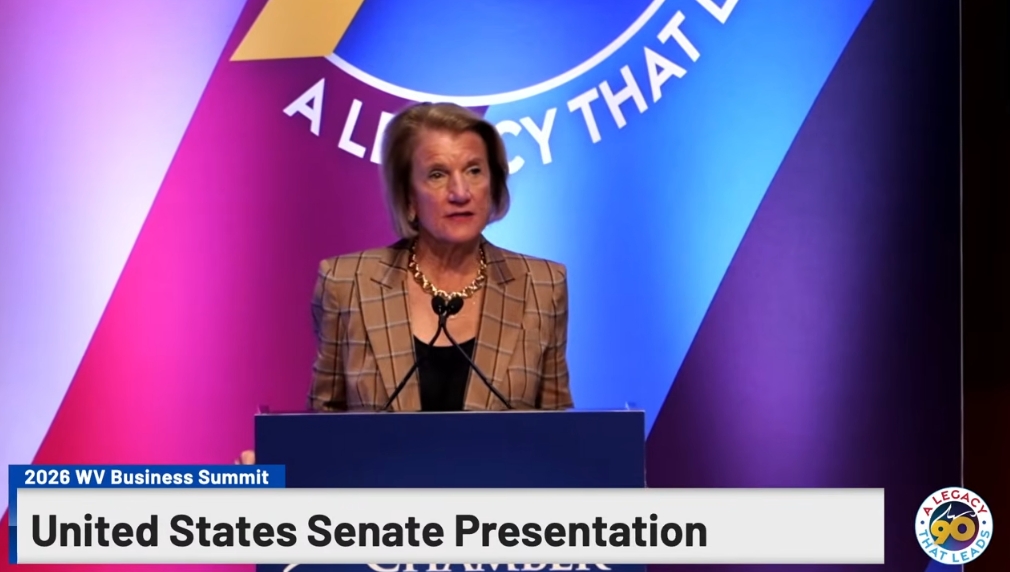
Six years to challenge a permit is too long, and I'd cut it. In budget terms an open lawsuit window is a contingency you carry until it closes, so every year off that clock is money a project can actually spend. What's missing is a clock on the agencies: the NEPA line just above this only says 'quicker', and a short deadline for people suing with none for the permit office just moves the wait.
“In judicial reform, Capito said the current window for lawsuits over permits, six years, is not sustainable. She said they’re looking to “tighten that up.” Other potential tweaks include the Clean Water Act, Capito said, along with endangered species and historic preservation regulations.”